
Who We Are Founders Our Origin Regions Products Tea Quality Work With Us Contact
Downloads Product Portfolio Coming soon Catalogue Coming soon Tea Catalogue Coming soon
Chat on WhatsApp
Black Turmeric — Arunachal Pradesh, Assam & Meghalaya
Speciality Spice
Rare BotanicalSpeciality Spice

Black Turmeric

A Specialty Spice. A Rare Botanical Treasure of Northeast India.

OriginArunachal Pradesh, Assam & Meghalaya
Botanical NameCurcuma caesia Roxb.
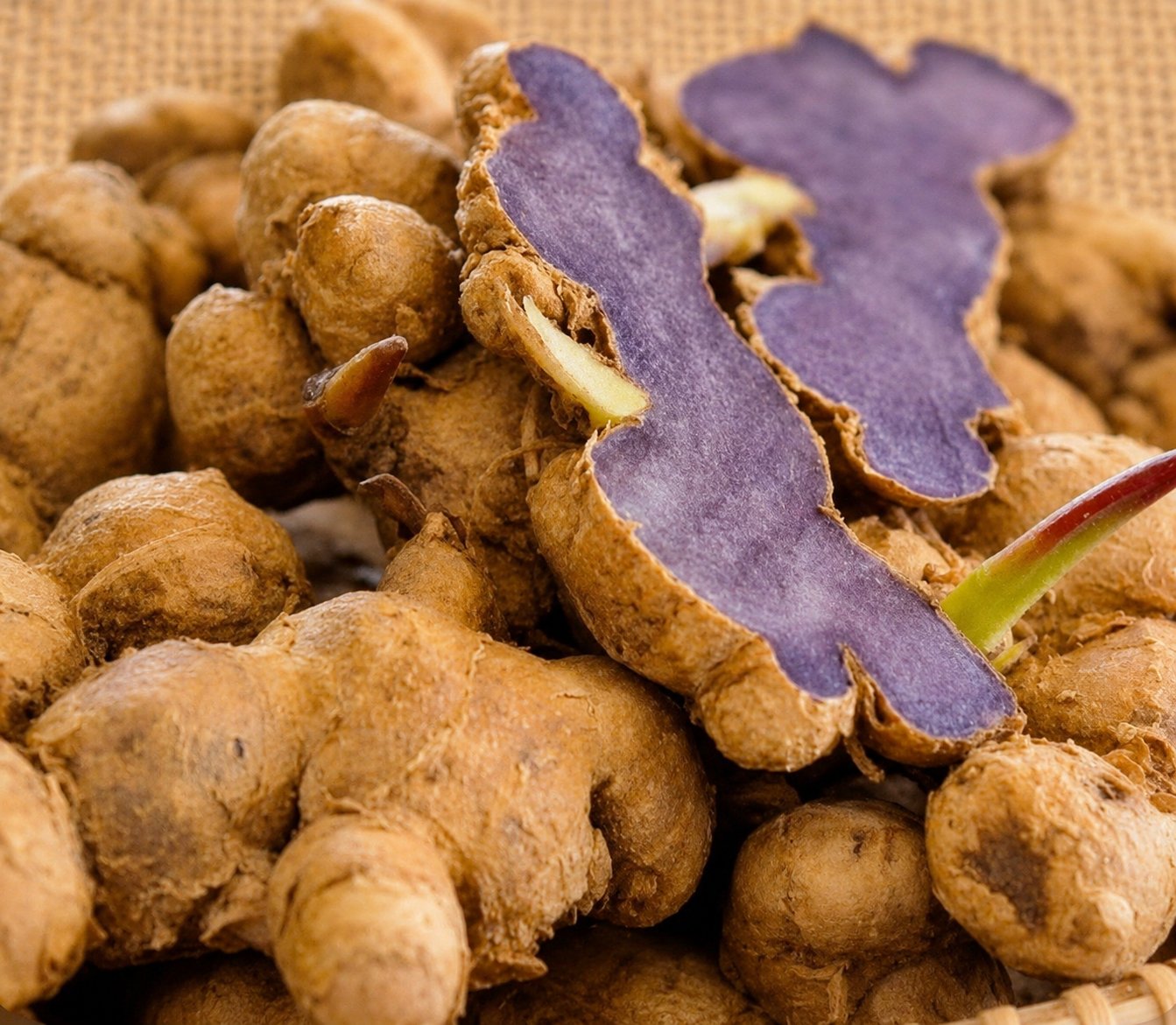
RhizomeBluish-black
AromaCamphoraceous
FormsDried Rhizome / Powder

Across the biodiverse landscapes of the Eastern Himalayas in Northeast India, generations of indigenous communities have preserved a remarkable knowledge of traditional spices, medicinal plants and botanicals. Among these lesser-known botanical treasures is Black Turmeric, scientifically known as Curcuma caesia Roxb.

Distinct from conventional yellow turmeric, Black Turmeric is recognised by its unusual bluish-black rhizome, deep violet markings on its leaves and characteristic aromatic fragrance. Its rhizomes contain naturally occurring anthocyanins, curcuminoids, phenolic compounds, flavonoids and aromatic essential oils, giving this distinctive botanical its unique appearance and phytochemical profile.

In the northeastern states of India, Black Turmeric is associated with the traditional knowledge and practices of indigenous communities. Its historical use in traditional preparations reflects the region’s longstanding relationship with its diverse plant resources.

More than a botanical ingredient — Black Turmeric represents more than an unusual rhizome. It reflects the botanical richness of Northeast India and the traditional knowledge of communities that have valued and preserved its uses across generations.

From the diverse landscapes of Arunachal Pradesh, Assam and Meghalaya, this distinctive botanical offers an opportunity to introduce a lesser-known ingredient of regional heritage to the global specialty spice, botanical and nutraceutical industries. At EasternRidge Organics, we aim to connect this regional botanical heritage with international markets through origin-focused sourcing, product integrity and reliable B2B supply partnerships.

Trade Specifications
Origin
Arunachal Pradesh, Assam & Meghalaya
Packaging
5 kg, 10 kg, 25 kg (as per buyer requirement)
MOQ
On request
Shelf Life
Established per product form and packaging
Price
On Request
Export Availability
Confirmed

Product Specification

Dried Whole / Cut Rhizome & Powder

Appearance
Externally brownish; internal tissue typically bluish-black to deep violet — confirmed against supplied lot
Aroma
Characteristic camphoraceous / aromatic
Moisture
Specified against batch laboratory analysis and agreed buyer requirement
Shelf Life
Established per product form and packaging
Packaging
5 kg, 10 kg, 25 kg (as per buyer requirement)

Powder subject to order and processing capability.

Composition & Actives

Rhizome Pigmentation — Bluish-black to deep violet; associated with anthocyaninsEssential Oil Yield — 0.31–2.53% (v/w) across 53 accessions, Eastern India studyMajor Volatiles — Curzerenone, camphor, eucalyptol, ar-turmerone, borneol, curzereneChemical Diversity — Curzerenone-, camphor- and eucalyptol-dominant chemotypesQuality Markers — Furanodienone and curzerenone — batch level by GC-MS

Nutritional Values

NutrientValue
Energy402.2 kcal
Protein7.9 g
Total Fat11.6 g
Carbohydrates67.1 g
Moisture4.2 g

Reference values per 100 g dried rhizome (accession Cc43) — Source: Lenka, Kar & Sahoo (2025), Scientific Reports 15, 40590 — values for the Cc43 dried rhizome accession, collected from Nongpoh, Meghalaya. They are reference values from one Meghalaya accession, not representative of all three sourcing regions, and not guaranteed values for supplied lots.

Applications

  • Specialty food ingredients
  • Nutraceuticals & dietary supplements
  • Pharmaceutical & phytopharmaceutical research
  • Traditional herbal formulations
  • Cosmetics, skincare & personal care
  • Essential oils & oleoresins
  • Fragrance & perfumery
  • Botanical extracts & phytochemical processing
  • Biotechnology & natural-product research

Key Benefits

  • Natural antioxidant compounds — contains naturally occurring phenolic compounds and flavonoids that have demonstrated antioxidant activity in laboratory research
  • Distinctive natural pigmentation — its bluish-black rhizome contains anthocyanins, giving it a unique botanical identity
  • Aromatic essential oils — volatile compounds including camphor and 1,8-cineole contribute to its distinctive aromatic profile
  • Traditional medicinal applications — traditionally valued in Ayurvedic and other herbal systems, with reported uses in traditional preparations
  • Researched chemistry — GC-MS studies, including work affiliated with the College of Horticulture and Forestry, Pasighat, document variation in essential-oil yield and composition among accessions
  • Nutraceutical and cosmeceutical potential — opportunities for research-led formulations, antioxidant-focused botanical products and specialty personal-care applications
Quality Assurance & Disclaimer. The nutritional values shown are published reference values for the Cc43 dried rhizome accession reported in the 2025 Eastern India study; Cc43 was collected from Nongpoh, Meghalaya. They are reference values from one Meghalaya accession, not representative of all three sourcing regions, and must not be represented as guaranteed values for supplied lots. The study reports variation among accessions and growing regions. Actual nutritional composition, essential-oil yield and phytochemical profile may vary with genotype, origin, cultivation conditions, harvest maturity, drying, storage and processing. Moisture, active-marker levels, microbiological quality, heavy metals, pesticide residues and other commercial parameters must be confirmed through batch-specific laboratory testing and agreed buyer specifications. Applications listed are potential ingredient-development and research areas, not claims of therapeutic efficacy or regulatory approval. For every commercial order, EasternRidge Organics can provide a batch-specific Certificate of Analysis (COA) and relevant laboratory reports where available or as agreed with the buyer. The buyer is responsible for confirming regulatory suitability for the intended market and application.
Research & Official References

  1. Lenka, J., Kar, B. & Sahoo, S. (2025). “Chemometric-guided diversity study of black turmeric essential oils from Eastern India revealed industrially feasible quality chemotypes with promising bioactivities.” Scientific Reports, 15, 40590. DOI: 10.1038/s41598-025-24187-1: https://doi.org/10.1038/s41598-025-24187-1
  2. Phurailatpam, A. et al. (2025). “Impact of Shade and Light Conditions on Growth, Yield and Chemical Contents in Curcuma caesia Roxb.” Agricultural Science Digest. DOI: 10.18805/ag.D-6157: https://doi.org/10.18805/ag.D-6157
  3. Leela, N.K. & Adheeba, P.K. (2024). “Curcuma caesia Roxb. – Update of phytochemicals and pharmacological properties.” Journal of Spices and Aromatic Crops, 33(1), 1–22. DOI: 10.25081/josac.2024.v33.i1.8477: https://doi.org/10.25081/josac.2024.v33.i1.8477
  4. A Comprehensive Review with Future Prospects on the Medicinal Properties and Biological Activities of Curcuma caesia Roxb. (2023)

Interested in Black Turmeric?

Tell us the form, quantity and destination — your request arrives on our trade desk’s WhatsApp, ready to price.

Related Origins