Golden Spice from the Hills of Meghalaya. Naturally High in Curcumin. A Treasure Rooted in North East India.
Lakadong Turmeric, grown in the Jaintia Hills of Meghalaya, is renowned for its exceptionally high natural curcumin content, reported at approximately 7% to 12%. This remarkable concentration of curcumin sets it apart from ordinary turmeric and makes it one of India’s most prized turmeric varieties. Along with its deep golden-yellow colour, characteristic aroma and warm, earthy flavour, this naturally rich composition has earned Lakadong Turmeric recognition as a distinctive spice with a strong identity of origin.
The cultivation of Lakadong Turmeric is particularly associated with the Nongbah–Shangpung belt of the Jaintia Hills, especially the West Jaintia Hills district. The crop is closely connected with local farming communities and the agricultural heritage of the area. Its distinctive qualities are linked to the specific growing environment and traditional cultivation practices of this part of Meghalaya, giving Lakadong Turmeric a character that sets it apart from many other turmeric varieties.
Lakadong Turmeric is officially recognised as a Geographical Indication (GI) under the registered name “Lakadong Turmeric”. The GI registration recognises its specific geographical association with Meghalaya and helps protect the product’s identity and reputation against misrepresentation. The official GI Registry records it under Application No. 741 and Certificate No. 575, with the Director of Horticulture, Government of Meghalaya, as the registered applicant. The registration was granted on 30 March 2024.
One of the defining characteristics of Lakadong Turmeric is its naturally high curcumin content. Government of Meghalaya sources report curcumin levels in the range of approximately 7% to 12%, while ICAR research identifies Lakadong as a local GI-tagged genotype from West Jaintia Hills with curcumin content above 7%. Curcumin is the principal yellow pigment and one of the major bioactive compounds naturally present in turmeric. Along with its strong colour, distinctive aroma and flavour, this composition has contributed to Lakadong Turmeric’s growing recognition among food, nutraceutical and ingredient industries.
More than a spice — for generations, turmeric has held an important place in the food traditions and everyday life of communities across Meghalaya. In the Jaintia Hills, Lakadong Turmeric represents more than a valued spice; it reflects local agricultural knowledge, the relationship between farming communities and their land, and a product identity shaped by its place of origin.
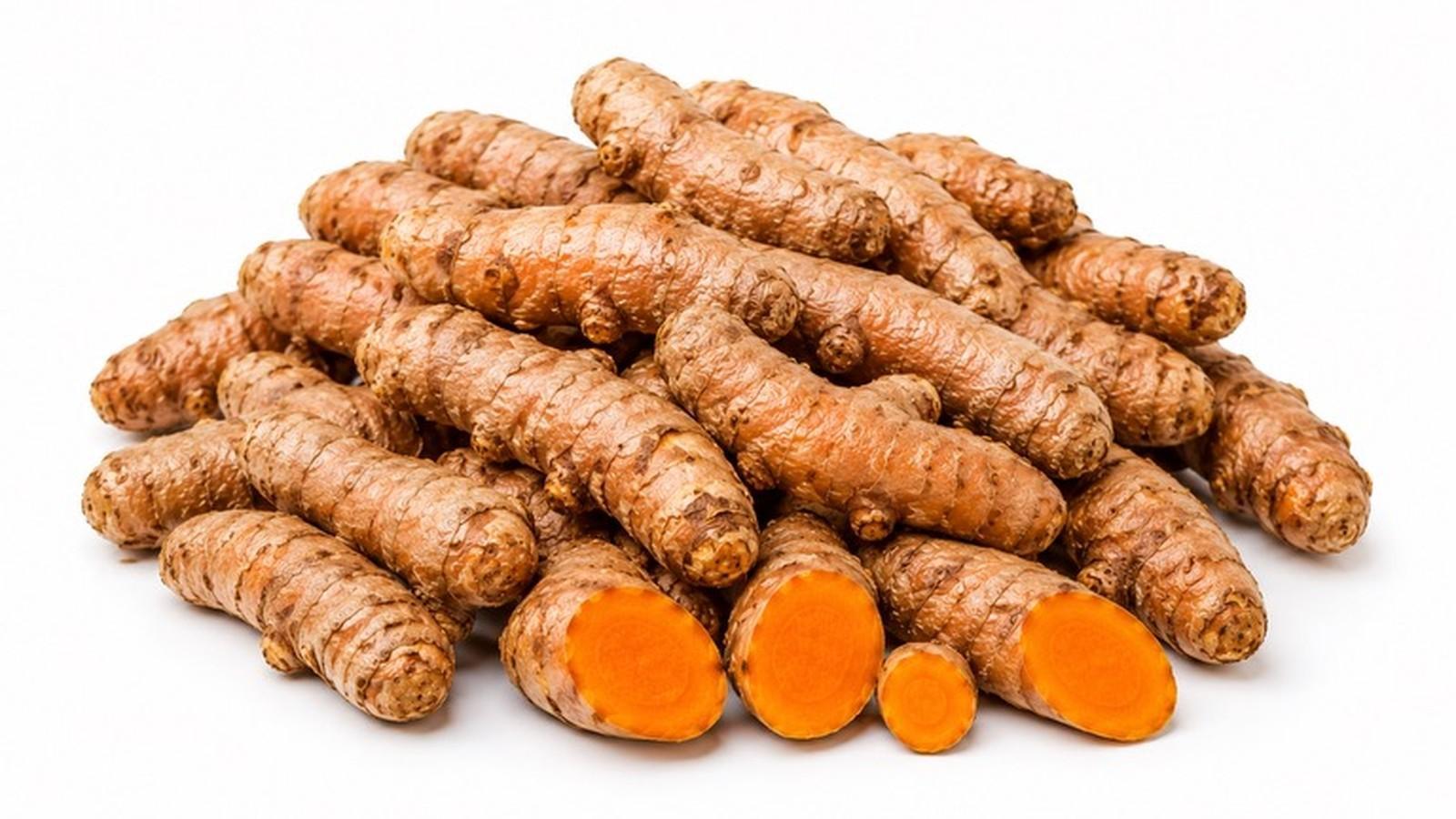
Today, Lakadong Turmeric is attracting attention beyond its home region for its colour, flavour and naturally high curcumin content. It is used in traditional cooking and in a wide range of contemporary applications, including spice blends, food products, wellness formulations, nutraceutical ingredients and personal-care products. Available in forms such as dried rhizomes and powder, it offers ingredient buyers different ways to incorporate its distinctive qualities.
At EasternRidge Organics, we are proud to share the story of GI-tagged Lakadong Turmeric from Meghalaya — a distinctive golden spice whose geographical identity, traditional heritage and naturally high curcumin content reflect the agricultural richness of Northeast India.
Registered under the name “Lakadong Turmeric”, recognising its geographical association with the Jaintia Hills of Meghalaya — particularly the Nongbah–Shangpung belt of West Jaintia Hills — and protecting its identity and reputation against misrepresentation. Registered applicant: Director of Horticulture, Government of Meghalaya.
Ideal for food & beverage manufacturing, spice blends, golden latte mixes and nutraceutical formulation.
The preferred raw material for grinding and curcumin extraction, retaining full aroma and colour intensity.
Typical nutritional values — reference values per 100 g
| Parameter | Turmeric Powder | Dried Fingers |
|---|---|---|
| Energy | 312 kcal | 312 kcal |
| Protein | 9.7 g | 9.7 g |
| Total Fat | 3.3 g | 3.3 g |
| Carbohydrates | 67.1 g | 67.1 g |
| Dietary Fibre | 22.7 g | 22.7 g |
| Calcium | 168 mg | 168 mg |
| Iron | 55 mg | 55 mg |
| Magnesium | 208 mg | 208 mg |
| Phosphorus | 299 mg | 299 mg |
| Potassium | 2,080 mg | 2,080 mg |
| Sodium | 27 mg | 27 mg |
Representative values for turmeric, not a laboratory analysis specific to Lakadong turmeric. Curcumin content (typically 7–12%) is listed under composition.
Source: Indian Food Composition Tables (IFCT 2017), ICMR–National Institute of Nutrition, Government of India, for representative turmeric and turmeric powder nutritional values; Mission Lakadong, Government of Meghalaya, and the GI Registry, Government of India, for Lakadong turmeric origin and characteristics.